Core Architecture
Core Subsystems
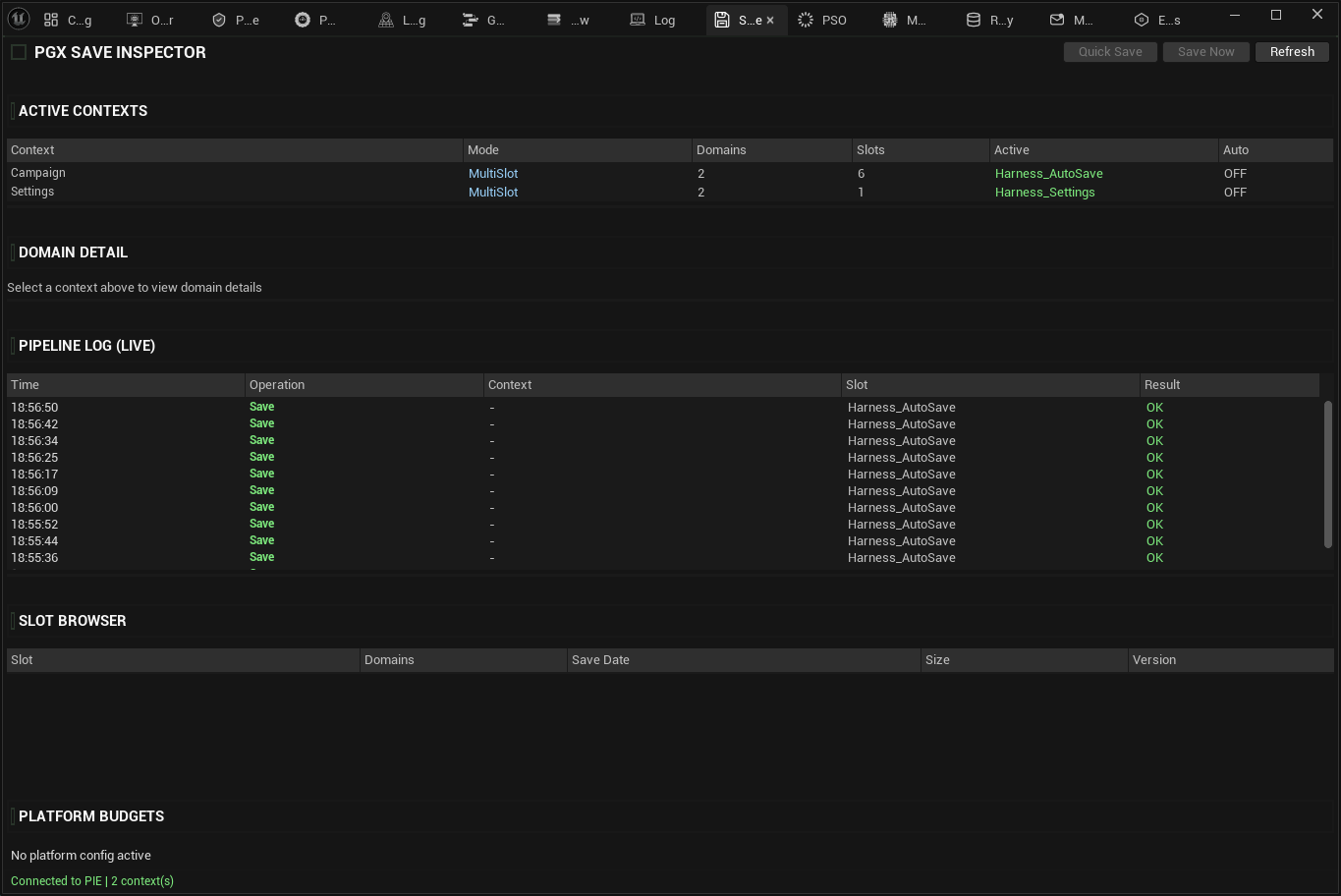
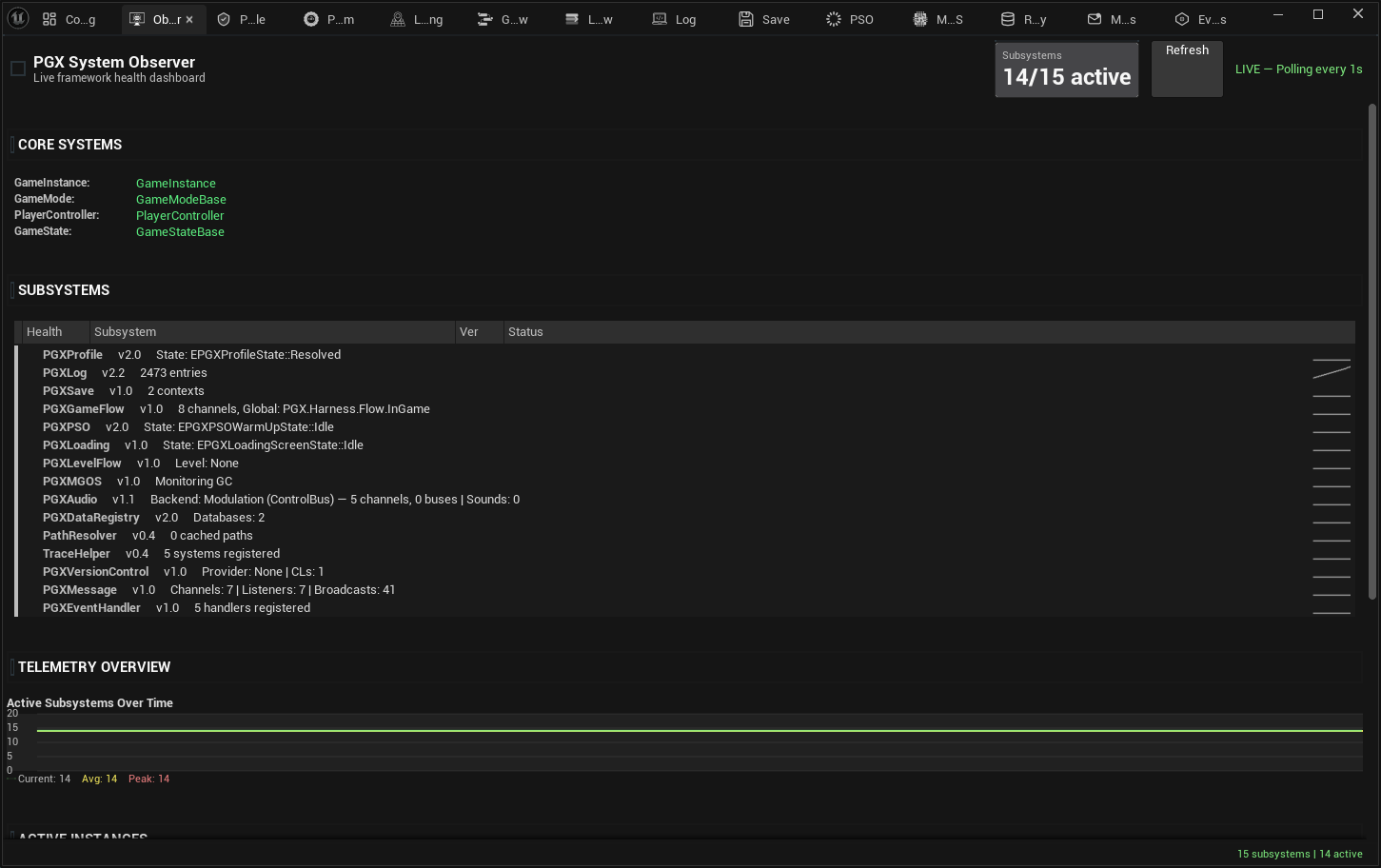
Each subsystem ships with types, delegates, config data assets, tags, console commands, a Blueprint library, an inspector, and documentation. Maturity varies by plugin — see the maturity matrix.
Profile
v2.0- Platform-aware budgets
- Subsystems enforce limits
UPGXPlatformConfig DA → Budget structs
Log
v3.0- Polymorphic observability
- 6-phase rewrite
LogPGX{System} per-module categories
Save
v1.0- Domain-based save slots
- Checksum + async migration
SaveContext → EPGXSaveResult
GameFlow
v1.0- State machine + history
- Batch transitions + revert
SetStateByTag → FPGXFlowResult
PSO
v2.0- Pipeline State precaching
- Pause/resume contexts
RequestPSOWarmUp → bool
LevelFlow
v1.0- Level transitions + sublevels
- Cancel + resolve support
RequestLevelTransition → Result
Loading
v1.0- Loading screen orchestration
- Progress + skip + force close
RequestLoading → Result
MGOS
v1.0- GC observability engine-wide
- Profile + history metrics
UEngineSubsystem — GC snapshots
Audio
v1.1- Dual-backend subsystem
- DataAssets, full API set
PlaySound2D | PlayMusic | Dialogue
Data Registry
v2.0- DataTable-first architecture
- Cache + compiled wiring
FindRegistryEntry → Entry
Construction
v1.3- DataAsset types
- Class override pattern
DA slot → Default | CppClass | Blueprint
Message
v1.0- Pub/sub message bus
- FInstancedStruct payloads
Broadcast PGX Message → OnMessage
EventHandler
v1.0- Behavior resolution bus
- Sequence + telemetry
QuickExecute → EPGXEventResult
Central Hub
Every System, One Dashboard
Every system above lives inside the Hub Dashboard. Version, health status, and KPI chips — at a glance. One click opens any inspector.
No terminal, no file browsing. Everything you need to manage PGX systems is already in the editor.
System cards · Real-time KPIs · One-click inspectors
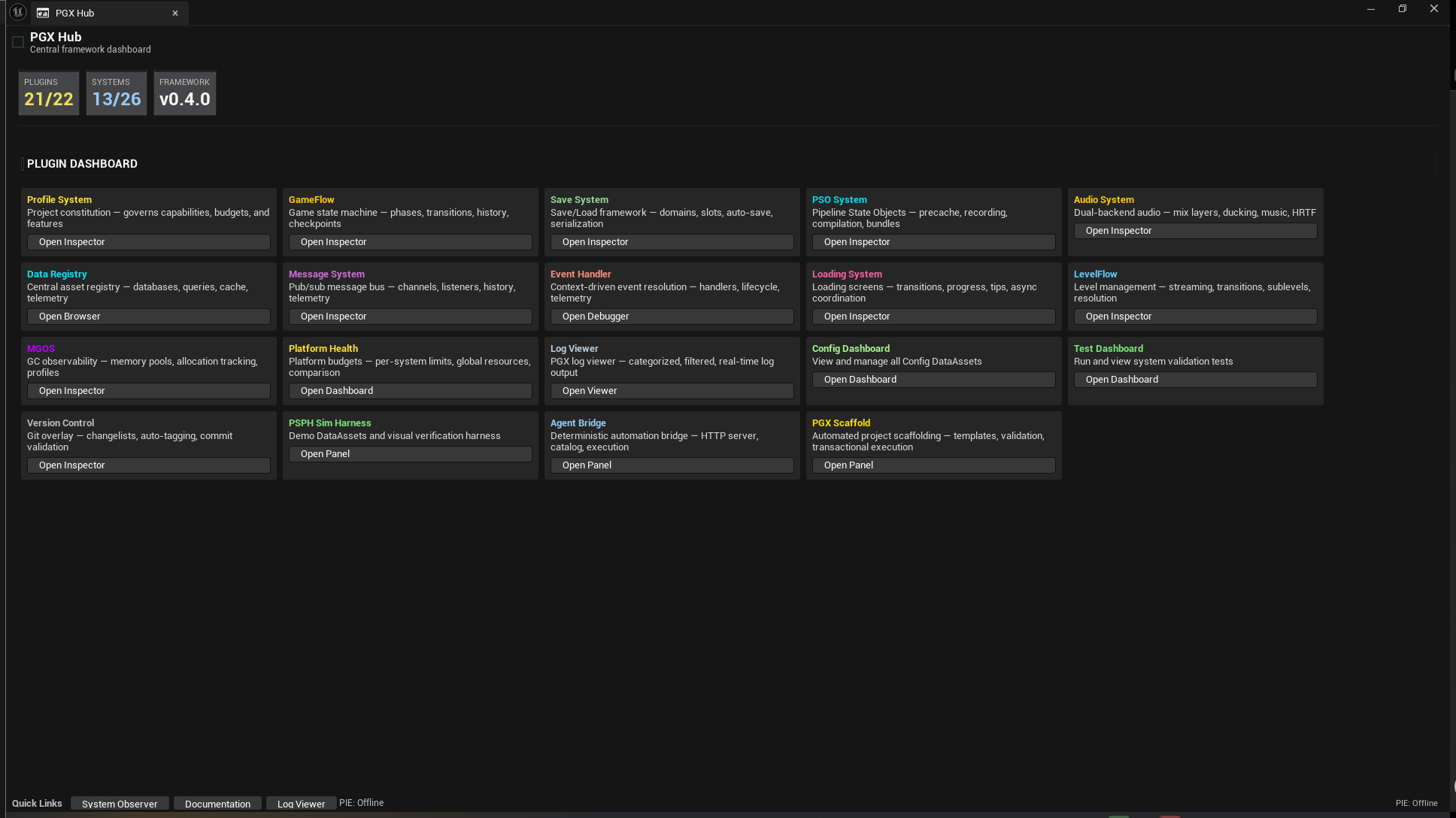
Hub screenshot from an internal development build. Counters predate the v0.1.1 snapshot.